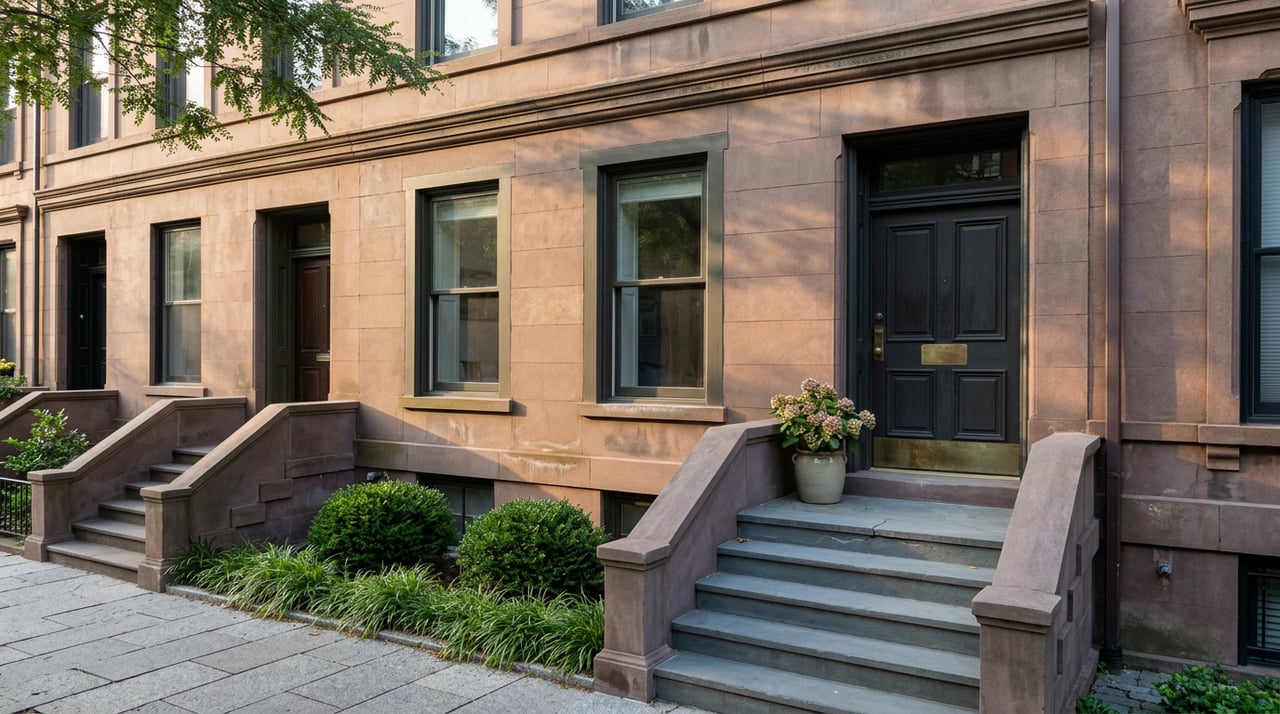
Picture two condos in the same Hoboken building closing in the same month. One sells for $2,000,000. The other, a floor up with a slightly better river view, sells for $2,100,000. On paper that's a small difference, the kind of gap a buyer might not even negotiate over. At the closing table it is not small at all. The first seller owes $20,000 in New Jersey's Graduated Percent Fee, the tax everyone still calls the mansion tax, as GTA Accounting Group explains. The second owes $42,000. A $100,000 difference in sale price just cost that seller an extra $22,000 in tax, because, as Morgan Lewis explains, New Jersey's tiers apply as a flat rate to the entire purchase price, not just the slice above each threshold.
That mechanic has been law since July 10, 2025, which means it has now shaped more than a year of Hudson County closings. What has changed more recently, and what most closing cost guides still gloss over, is who runs into it. In Hoboken, the answer as of mid-2026 is telling: it's the median seller, not just the penthouse seller.
The Law Changed Twice, Not Once
For two decades, New Jersey's mansion tax was simple enough to explain in one sentence. Any residential sale over $1,000,000 triggered a flat 1% fee, and the buyer paid it at closing. Legislation signed in mid-2025 rewrote both halves of that sentence.
First, the obligation moved from buyer to seller. A deed recorded on or after July 10, 2025 puts the fee on the grantor, not the grantee, unless the purchase contract says otherwise. Second, the flat 1% became a tiered structure that climbs as high as 3.5% for the highest-value sales. The tiers apply to properties classified as residential, including condominiums and cooperative units, once the sale price crosses $1,000,000.
Here is where the closing cost guides tend to undersell the story. The tiers are not marginal brackets the way income tax brackets work, where only the dollars above a threshold get taxed at the higher rate. New Jersey's fee applies the full percentage to the entire sale price the moment a threshold is crossed.
| Sale Price | Rate Applied to Full Price |
|---|---|
| More than $2,000,000 and no more than $2,500,000 | 2% |
| More than $2,500,000 and no more than $3,000,000 | 2.5% |
| More than $3,000,000 and no more than $3,500,000 | 3% |
| More than $3,500,000 | 3.5% |
A sale priced one dollar into the next tier does not owe a little more tax. It owes a lot more, on every dollar of the price, not just the increment.
Why Hoboken's Own Price Growth Pulled It Into the Tax
The mansion tax was written with a $1,000,000 threshold in 2004 and that number has never moved, even as it has been amended twice since, as Saul Ewing notes. It was designed to reach the top of the market. It did not need to reach further than that, because in most of New Jersey it still doesn't.
Hoboken is the exception, and the reason has nothing to do with legislators targeting the city. It has to do with Hoboken's own appreciation curve running into a threshold that stood still. Per Hudson County MLS data through June 2026, Hoboken's median condo sale price reached $1,100,000, up 22.2% year over year, a gain that ranks among the fastest in the region this cycle. That means the median Hoboken condo, the one in the middle of the pack, not the penthouse, not the outlier, now sells above the line that used to mark a luxury transaction.
Fold in the seller-pays shift and the effect compounds. A Hoboken seller closing at that $1,100,000 median owes roughly $11,000 in Graduated Percent Fee, a bill that a seller in the same building would not have owed at all before July 2025, and would not have paid personally even if the price had cleared $1,000,000 under the old buyer-paid rule. Waterfront buildings push the exposure further. Hoboken's Manhattan-view high-rises, the corridor that includes buildings like Hudson Tea, Maxwell Place, and 1450 Washington, typically command $1,400,000 to $3,000,000 or more for penthouse-tier product. A waterfront condo at 1500 Hudson Street set a new city record in April 2026 when it traded for $4,750,000. Under today's rules, a sale at that price sits in the top 3.5% tier, which means the seller alone faces a tax bill of roughly $166,250, a figure that simply did not exist as a seller obligation before the 2025 rewrite.
Downtown Jersey City Still Mostly Sits Below the Line, For Now
Downtown Jersey City tells a different story, at least for the moment. The neighborhood's median home price landed at $849,000 in June 2026, and current condo listings show an asking-price median near $879,000, both comfortably under the $1,000,000 threshold. Most Downtown Jersey City condo sellers this year are simply not encountering the Graduated Percent Fee at all.
The premium end of the market is a different conversation. Downtown high-rises with river views typically trade between $900,000 and $1,500,000, a band that straddles the threshold depending on floor and finish. Waterfront penthouses in Newport and around Exchange Place run from $1,500,000 to $3,000,000 or more, squarely inside the 1% to 2.5% tiers. A seller listing a full brownstone in Hamilton Park or Van Vorst Park, where prices commonly reach $1,000,000 to $3,000,000 and up, faces the same math a Hoboken waterfront seller does.
The distinction that matters here is not that Jersey City is exempt and Hoboken is not. It is that in Hoboken the tax has become a routine cost of selling a typical unit, while in Downtown Jersey City it remains a condition of the top slice of the market. That gap will not stay fixed if Downtown's premium segment keeps appreciating the way Hoboken's has.
If You're Selling in New Jersey to Buy in Sarasota
For sellers whose next move is a Florida coast rather than a different Hudson County block, one more layer belongs in the conversation before a listing goes live. New Jersey withholds tax from non-resident sellers at closing, as the New Jersey Division of Taxation explains. That withholding is reconciled later on a New Jersey tax return and is not the same fee as the Graduated Percent Fee, but it lands at the same closing table for a fair number of Hoboken and Downtown Jersey City owners in the process of relocating toward Sarasota. This is a conversation for a closing attorney and accountant well before contract signing, not a detail to discover on the settlement statement.
Before You Set a List Price Near a Bracket
None of this changes how a condo should be marketed or shown. It changes how a net sheet gets built before the sign goes in the yard.
- Ask your closing attorney to run the Graduated Percent Fee at your target price and at $50,000 above it, before you finalize a listing price near $2,000,000, $2,500,000, or $3,000,000.
- Confirm in writing whether your purchase contract shifts any portion of the fee back to the buyer. The law puts the obligation on the seller by default, but the parties remain free to negotiate it differently.
- If a buyer's opening offer lands just above a bracket line, treat it as a negotiating point, not just a number. A seller might reasonably ask for a price adjustment that keeps the deal on the seller's side of a tier rather than accept a headline number that costs more in tax than it gains in proceeds.
A Note on the Transition Period
Earlier coverage of this law spent real space on a grace period; Bressler notes that it involved contracts signed before July 10, 2025 and deeds recorded by November 15, 2025. That window closed in late 2025. Any guide still describing an active refund option is describing a rule that no longer applies to a sale closing today.
A Few Direct Questions
Does the Graduated Percent Fee apply to condos, or just single-family homes? The Matus Law Group explains that it applies to Class 2 residential property, which includes condominiums, along with certain farm properties with a residence and cooperative units. Condo sellers are not exempt.
Is this a new tax on top of the standard transfer fee? Yes. NJ REALTORS notes that the Realty Transfer Fee has been in effect since 1968. The Graduated Percent Fee is a separate, additional charge that only kicks in once a sale price crosses $1,000,000.
Can a grace period refund still be claimed? No. The refund mechanism for contracts executed before July 10, 2025 required recording by November 15, 2025. That deadline has passed.
If you're pricing a Hoboken or Downtown Jersey City property anywhere near one of these thresholds, or planning a sale timed around a move to Sarasota, the numbers deserve a real conversation before the listing photos get taken. Brenda Wolfe works both sides of that move and can walk through what your specific price point actually nets you. Let's talk about your next move, schedule a consultation.
This article is general information, not legal, tax or financial advice. Consult a qualified professional about your situation.