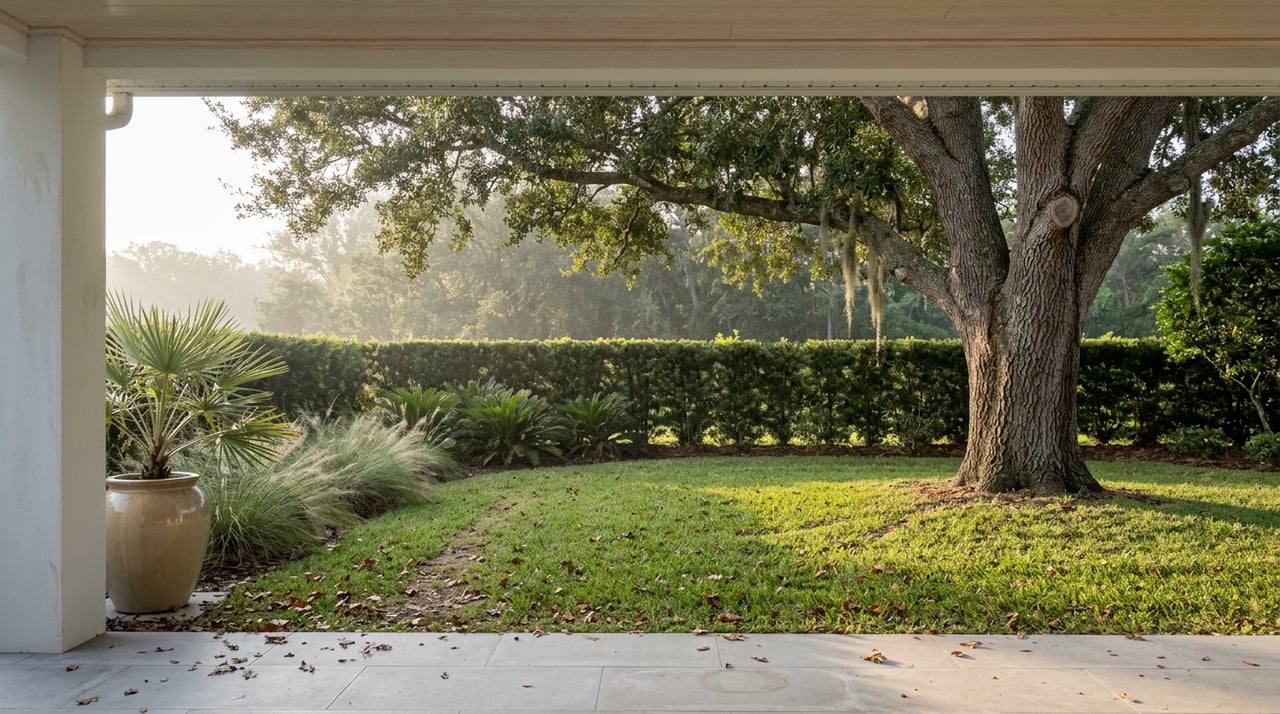
As MySuncoast reported, Mayor Debbie Trice tells a story about herself as a girl, walking past a manicured golf course and asking if she could go stand on the grass. She was told no. You had to pay and play golf to set foot on land like that. She did eventually learn the game, she says, but what she'd really wanted all along was just to walk the open space without hitting a ball.
On July 13, the City of Sarasota cut the ribbon on the reason that story finally has a different ending. Bobby Jones Nature Park, 110 acres carved out of the eastern side of the city's own municipal golf course, is now open to anyone, every day, for nothing. No green fee. No tee time. This is not a trail somebody bolted onto the edge of a golf course as an afterthought. The golf course had to get smaller first, on purpose, so this could exist.
What Actually Opened
The main path through the nature park is the Marlon Brown Eagle Trail, 1.57 miles of crushed shell and repurposed golf cart lanes named for the former city manager who oversaw the Bobby Jones redevelopment. Three shorter branches peel off it: the Prairie Trail at four-tenths of a mile, the Hammock Trail at just over a tenth, and the Osprey Trail at under a tenth. None of these are long by regional standards. What they cross is the point. The routes wind through wetlands built where fairways and greens used to sit, and the city and Sarasota Magazine both describe the marshes as already functioning wildlife habitat, not a rendering of one.
Access sits next to the driving range off Circus Boulevard, on the same 307-acre property that has held Bobby Jones Golf Club since the 1920s. The park is free and open daily from dawn to dusk, and it closes only when the golf course itself is closed.
Why the Course Had to Shrink First
Bobby Jones opened in 1927 in honor of the golfer, on land once called Little Camp Sawgrass, a marshy catch basin between Fruitville Road and 17th Street. Over the decades the city built it out to 36 holes. The renovation that produced today's nature park went the other direction. Golf course architect Richard Mandell of Pinehurst, North Carolina restored the property back to its original 18-hole Donald Ross layout plus a short 9-hole course, and the acreage that came off the golf side became something else entirely: new containment ponds and marshes doing the work fairways used to do, only better.
That old drainage function didn't disappear. It got upgraded. Sarasota's parks and recreation director, Jerry Fogle, walked reporters through the results ahead of the ribbon cutting, describing improvements to the trail system through the nature park and offering a simple assessment, as MySuncoast reported: "It is just gorgeous." What he's describing is a stormwater treatment facility wearing a park's clothing. Water flowing south from as far as University Town Center gets filtered through this exact ground before it reaches a tributary of Phillippi Creek, then Sarasota Bay, then the Gulf. Residents downstream in that watershed get a quieter, less visible benefit than a nice walk. They get a floodplain that's doing more work than it used to, on the same footprint, for free.
Trice's own line captures the shift better than any press release could. Asked as a kid if she could walk the grounds, she remembers being told no. Now she gets to ask a different question out loud, as she told MySuncoast: "Can I walk on it?" The answer, for the first time in the club's century-long history, is simply yes.
Who's Paying for the Rest of It
Phase One cost $1.67 million, paid for out of park impact fees, the assessments the city collects on new development rather than general tax revenue. That money was already sitting there waiting to be spent on exactly this kind of project.
Phase Two runs on a different model entirely. The bird blind, boardwalk, overlooks and additional plantings planned next are funded through a $3.5 million fundraising agreement with Big Waters Land Trust, the nonprofit that holds the conservation easement over the whole Bobby Jones property. That's not collected money sitting in an account. It's a target the land trust still has to raise, through donors, before shovels move. City officials expect construction to start in late 2026 or early 2027 and wrap sometime in the second half of 2027, but that timeline depends on giving showing up on schedule, not on a line item that already exists.
The wildlife didn't wait for any of it to be official. A February 2024 bird count by the Sarasota Audubon Society tallied 76 species on the property, more than two years before Phase One's ribbon was even cut. The marsh had residents before the park had a name on a sign.
One Path Among Many
Look at the map the city released with the ribbon cutting and Bobby Jones Nature Park isn't drawn as a standalone amenity. It shows a planned Legacy Trail connection running straight into Sarasota County's 17th Street Regional Park next door, which is itself being rebuilt as an outdoor athletic complex.
That matters because the Legacy Trail it would connect to is already one of the busiest public assets in the county, drawing more than 600,000 users a year according to county parks staff. This spring the county gave walkers their own dedicated lane for the first time along one of its most congested stretches. A ribbon cutting on March 31 marked the completion of a 1.5-mile parallel pedestrian path near Beneva Road, separating pedestrians and joggers from bikes, scooters and rollerbladers on a segment that had gotten crowded enough to need it. Days before that, on March 26, a separate half-mile connector opened linking the Legacy Trail at Beneva Road across to Fruitville Road, built as part of the emerging 420-mile Florida Gulf Coast Trail, a regional network still being stitched together piece by piece.
None of this is incidental to Bobby Jones. The city's own transportation master plan, called Sarasota in Motion, names trail network expansion as its single highest priority, and the Legacy Trail connector into Bobby Jones is one of the specific links the plan calls out by name. The nature park that opened this July isn't a finished thing sitting by itself off Circus Boulevard. It's one segment of a system the county and city are actively building toward, using a patchwork of impact fees, state grants, private donations and nonprofit fundraising that shifts depending on which piece of trail you're standing on.
If You Want to Walk It This Week
Park at Bobby Jones Golf Club off Circus Boulevard and follow the signage to the trail access point next to the driving range. Bring water. The paths are crushed shell and old cart asphalt, flat and easy underfoot, with no fee and no tee time required. Go early if you want the birds; that Audubon count didn't happen by accident.
What changed this summer in Sarasota isn't just that a new trail opened. It's that a piece of land the city spent a century treating as something you had to pay to touch got reclassified as something you're simply allowed to walk. The golf course got smaller so the town could get a little bigger. Trice got her answer decades later than she wanted it, but she got it.
If you're weighing a move to Sarasota, or already live here and are curious what a neighborhood like this one actually offers day to day, that's the kind of detail that doesn't show up in a listing description. Brenda Wolfe works Sarasota's coastal single-family market with exactly this level of local detail in mind. Let's talk about your next move, schedule a consultation whenever you're ready.